Showing posts with label 藝術家觀看. Show all posts

Wednesday, January 25, 2023

再看2004的 NEXUS: Taiwan in Queens


Re-connect   2004 Nexus: Taiwan in Queens 


在找尋一些2003 的Parallax展覽檔案之間,偶看到2004 年策劃在皇后美術館的“Nexus:Taiwan in New York” 台灣藝術家在紐約的展覽計劃書,以及期間所寫的介紹文字,想起當年義無反顧脫離了安穩的收入工作而直接投入獨立策展的傻意志,期間經歷的顛沛困境也曾令人失去前進的勇氣, 然而生活的故事也同時啓發了心境,記得你是誰而得以不離初衷。近3年在經歷了瘟疫帶給世界的無助與不安,期間自己也幸運的得以更多在自然的相處得到精神與呼吸的調整空間,眼見各國政治地緣間的勢力角逐,美南部邊境的移民處境,世界的戰亂隱隱危機動態,之前中國當代藝術在這十年中間的起落,環顧台灣藝術圈世界各地與自己在紐約的處境,值得再來重新審視生命各式的優先順序,在更包容及適應時代與環境時,希仍把持主體本質安然若水的境界。

https://www.nytimes.com/2004/04/30/arts/art-review-illustrating-the-immigration-from-taiwan-to-a-new-land.html

https://www.amazon.com/Nexus-Taiwan-Queens-Exhibition-Museum/dp/1929641044

台灣藝術在紐約皇后美術館的接觸 (2004 年 4月)

綠可

來自各方具遠見的背後支持力量

NEXUS: Taiwan in Queens得以度過許多非預期的障礙及困難完成開幕,完全是來自各角落的支持與及時出現的貴人,在回首崎嶇過程時不能不提及某些人及事。首先,皇后美術館館長Tom Finkelpearl 自始至終沒有動搖的信賴與鼓勵,以及全力的支持, 美術館的CEO及總裁Alan Suna環抱著國際村的視野以及實際面對一個當代美術館所處的環境,NEXUS是開拓專業視野的案例。

在2002年的秋天,這一個台灣紐約社區連結展覽策劃實際構想產生,當時,並未預想到會面臨到財務支援上許多的困難,紐約台灣社區領袖賴醫師是允諾協助募款的第一位,而黃再添先生以一個摯愛台灣的心,進一步的在實際過程中的組織以及實際的投入聯繫,並不斷給予相當中肯的指導意見。這期間,還有百利公司陳奎章先生,協和鋁門窗陳秋貴先生提供藝術家的住宿的全力支持, 紐文中心劉培主任及張書豹秘書,更是以一個超越政府機構官員的身份,居中協助得文建會最終贊助,使展覽得以理想的擴大呈現。

在台灣的舊識陳錦誠﹑賴香伶﹑ 劉怡芳在過程中提供了即時的經費救急,雖然最後並無法使用該筆獎助金, 溫淑姿﹑蔡昭儀自始自中的關注及協助,美籍友人侯康德想出Nexus 這一個及極具意義的主題, 並且誠摯耐心的全程經歷畫冊文字的編輯,徐群忻接觸場域的一個文章構想, 美術館員Hitomi從極苛刻的到全力的配合協助,自一種輕視台灣到訝於這一股來自台灣的凝聚力量,另商敘涵以一個台灣工作人員及時提供技術上聯繫支援。彭偉君自一位紐約大學的實習生,一起將這展覽完成,舊同事徐肇英及時投入協助許多配合工作, 張純英老師在許多轉悷點給予的忠告與背後不可見的支持,這展覽過程中所遇到的 人都在某些時候產生種重大意義。

參展藝術家背後發生的故事

Nexus展覽因為財務的支持者態度轉變的困境下,數度考慮縮小或是去除藝術家住在台灣部分,然而,參展的二十位藝術家, 在經費極度拮鉅的狀況下,共同承擔解決過程中的問題,熱誠的參與展出,令美術館極為驚訝與佩服,最後在經費不足的狀況下,台灣藝術家決定自行將作品扛到紐約。顏忠賢因華航大幅縮減贊助,致使80組竹架無法成行而改變展品內容。台灣藝術家則安排分散寄宿在社區家庭中,以節省經費,然需每日長途跋涉通勤到美術館,然也使的展覽更加與地域產生的連結意義。吳瑪俐是第一位到底達紐約的藝術家,而在紐約拍攝的實際過程中遭到天氣、風向、陽光限制,並有水域管理局的刁難等困境,到最後一天方完成,張力山2000根烤焦的法國麵包在家燒烤的過程中,引來鄰居報警的騷動,城市按摩小組躺在紐約市街頭的遊戲行動創作,在開幕前一刻錄製剪輯出現, 使的展覽產生某種的驚奇嘲諷高潮。這一次展覽的每一件作品都在裝置過程中,作了因地制宜的調整, 洪素貞在穿完2000 針線後,除去了放置兩張椅子的計畫,林書民以包裝箱就地取材,館方並向惠特尼美館商借雙年展的運畫箱裝置,林世寶一千件牛仔褲在最初以折疊方式到交換玩具, 一直到人體模型及有意無意間的任意懸掛裝置, 池農深的草編到褟褟米,錄影帶內容也依心境信仰及現場技術配合呈現方式, 陳俊義加上攝影圖像及錄影帶的在裝置,使得作品更為多樣, 林珮淳36片圖像的螺旋垂吊也因實際場地作了許多的調整,林俊亭在電梯間獨訴一格, 黃世傑作品在館裡紐約模型的一角呼吸唱歌,使得美術館各角落生動活潑,盧憲孚的燈籠及聖誕燈飾組合,並在蘇活區珠江百貨的櫥窗連結裝置, 使展覽連結延伸到了曼哈頓區, 而臨時起意的鏡子增添作品的另一層觀念,趙永恕的作品則自望遠鏡、 到蓋房屋、 拼圖 一直到最後決定融入教育活動的互動創作,葉錦睿因為場地因素而必須增加我的液態等於我的蒙特理安,以適應兒童的參與操作,虞曾富美的兩件大自然的畫作因為牆面的尺寸成為唯一的繪畫營造出一種氣勢, 廖健行第二代的攝影創作因為所給的教育部門牆面而改變。

展覽的思路

從某種角度來思考,以在海外的台灣人為主體來策劃一個移民為中心主題的展覽,似應環繞某種鄉愁或是移民故事等。但是,Nexus展覽在視覺上,並未直接顯現出台灣移民歷史或是詮釋社區的圖像;受邀參展的當代台灣藝術家,不論是居住在台灣或旅居紐約及舊金山,其展出的作品卻都間接述及移民的特質,呈現地域遷移、或是心緒移動,乃至於在環境轉換間生活的掙扎與精神上的調適,由異到同,從對比格格不入到彼此相容,俟轉化與適應後,在安定中依然顯露著不安,甚或在認同與回憶間交錯。

一群來自同樣地點的人,進入不同文化的地域,層層改變與適應過程,就如同一段漂流的根,試圖吸取異質環境的養分,進而轉化根植並拓展,

Nexus展覽在紐約藝術家的部分,並未以一般所想像的紐約蘇活區或是雀而喜等藝術區域的藝術家為主; 相反地,展覽試圖突破一種以藝術家居住區域的區隔,以及一種年齡的限制,藝術家的作品涵蓋了錄影、攝影、數位藝術、多媒材的裝置、及大尺寸的繪畫作品,與多件需觀眾參與的互動作品,這些藝術創作在台灣與皇后區的交流往來間反映了移民社會主題,象徵性突顯了社區、社群及環境互動變化的問題。原籌畫的意涵及聯繫過程中,出現多重的連結及交互組合,這種連結發生在個體與群體,個體與個體間,中心與邊緣,內與外,上與下,異與同間。在家鄉與所在地國之間,在有形的外圍環境與內心的掙扎衝擊下,種種複雜的因素轉化了環境,在異地形成了一個新的文化接觸場域。Nexus這樣一個以聯結及中心組織為意義的展覽主題竟也就自然發生了。


藝術作品介紹

林俊廷的(夢 • 遊) 
作品裝置在美術館的電梯間。觀眾進入偌大(與一般電梯相較)的電梯內,櫃子內有座縮小的遊樂場旋轉木馬的空亭子旋轉,幾隻螢火蟲在亭子四周飛繞,同時傳來悠遠的音樂聲。漸漸地,木馬逐漸化作煙霧消散,光線漸暗,樂聲漸微,突然一個閃光,回頭一看,一隻發出幽微光線的馬真實地出現在電梯空間中,如同童年的木馬上下晃動著。電梯是一個封閉同時不封閉的空間,人們穿行在這物質世界中,像是某種鑲嵌在真實與虛擬、現實與夢境的相互映射關係中…這一種夢境處於兩個虛假的世界 家鄉與異地兩處。夢遊醒來發現在某一處迷失與迷惘。

林珮淳 (美麗人生)
作品混合了象徵繁華的市景景象宋朝清明上河圖與最近社會的報紙的新聞與廣告,運用電腦合成的 位藝術捲軸創作,這件作品掛置在美術館中庭位置形成漩渦式的造型,遠看是幅美麗的傳統水墨都市景觀,但觀眾直接走進這一個漩渦式捲軸環境,靠近觀察,發現風景與台灣及紐約報紙標題與廣告文字併置,恰如一個放大的個人事件, 產生一種現代與過去的迷失,取名美麗人生,提起一種諷刺性的議題,複雜的媒體發行左右了當代人的生活、思考、行為及情緒,操控了我們的思考與理解。

盧憲孚 (聖誕燈龍/雙分認同 第一號:慶祝就是認同/慶祝就是存有)
對於一位新移民,聖誕燈龍,是嘗試為在美國或在基督教文化下的台灣移民,創造一種「雙分認同」的象徵。燈籠是台灣主要節日中不可或缺的裝飾,尤其是農曆新年;正如聖誕燈是現在聖誕節中不可或缺的裝飾一樣。藉由組合兩種不同文化裝飾中的主要象徵,創造出一種「雙分認同」,一種雙重身分認同,一種新移民也因此轉化出來。

城市按摩隊( 張秉正, 陳世强, 吳德淳) , 頸部按摩; 一種掐住脖子的方式來看見現實

作品將用行動藝術質疑生活中的規則 隨後將分別用錄影和照片將行動紀錄下來作為展覽的作品。此外,在台灣的頸部---濁水溪,其上中下游沿岸,各選取兩個地點,共六個家庭﹐讓家庭成員協助藝術家吞下六種生計作物---高麗菜﹑檳榔﹑玉米﹑甘蔗鴨子﹑菊花。並用照片以超現實和詼諧的方式,呈現美麗虛幻的全球化規則影響下的台灣現實平民生活。

王德合(記憶的行李箱 ) 
 結合行李箱與音樂盒的雙重意象,進行行李箱系列的創作。對成長記憶的再現與圖像引用,是源於對土地深切的認同。但箱中意象的轉換,又把思緒拉回到進行中的當代生活,造成觀看者認同意識上的疏離。在「認同/疏離」的交錯作用下,主客體間同時擁有了更多元的闡釋空間與意涵,在批判中又不失開放性。

吳瑪悧 (水祭) (水上人家) 
這些年吳瑪悧的作品都和水和河、海有關。一方面住在河邊,一方面因為台灣是個島國,四周環海。她常想著,四周這片海域環境對於生活在其中的人的影響是什麼。移民、漂流、沒有中心、或不斷改變中心、多元….不都是水所沖積而來的文化現象嗎?然而它們卻又和島國人民的狹窄、排他、故步自封、缺乏安全感形成對立。到底這是怎麼一回事? 她試著從河、從海找到可能的答案。

顏忠賢 參道---一種西遊記的參 “人蔘果” 式的虔誠的不得不...... 
在2002年被選為第一位PS1當代藝術中的駐村創作藝術家, 為期一年的紐約取經是實在的西方
體驗, 他作品取自西遊記人蔘果的一節,使用毛線編織出來的一種有機的結構體,垂掛或裝置
在美術館的大型岥道上,參道。一坡道。斜的。登高的。遠行的。美術館變成廟堂式的虔誠的
不得不。再體驗一種必須走必須拜的“參”的困難。

張力山屮 (Tse) Id—by Van屮 (Tse)
使用 2000-2500個多重燒烤的國麵包,作品將任意而有意的黏貼在大的牆面上,形成一種移動性的圖案,作品遠看像一群螞蟻或是一種有機的爬動及游動,形成一種急迫感,麵包是西方世界中基本而廉價的食物。屮 (Tse)草字頭是漢字的偏旁,也是一個草的圖案形態。 意謂著一種易生的低等植物,有著生存的韌性, 在任何土地中汲取養分而存活。
張力山在一九九五年買了一部小貨車, 開始他的搬家事業結合藝術創作生涯, 在這展覽中他集結了所有的搬家訂購单, 逐一塗掉其中明顯的文字, 裝裱成近五百幅的觀念藝術作品,Id—by Van是殘酷生活與現實掙扎的寫照。

趙永恕 (遷移反射鏡像裏的土地) 
居在並工作在法拉盛區, 每日近距離觀察社區的動向及發展,趙永恕的作品著重於教育性的活動參與,及紀錄房屋建造的變遷, 呈現異地上逐步形成的新社區, 作品將與美術館教育小組活動結合,參觀學校團體參與建造個種型態的房屋, 之後將會放置於美術館前,作成紀錄逐步裝置在展覽場所中,在展覽期間作品從開幕僅有的參與說明文字到展覽結束形成一完整的作品,就如同社區的自然形成。

陳俊義 (認定-存在)
不同族群及性別的肢體片段方塊,組成一個互動的裝置作品,呈現人類基因的再架構,這一件作品中,藝術家成為媒材的提供者,在觀眾參與的組合下,各個方塊片段試圖突破存在與認同的對話,這一些方塊如同細胞與基因組合,重組成一個新的合成體,建立新的認同,也因為新的授予及認定,影像被重新定義。他的作品雖然出現裸露身體方塊, 卻並沒有呈現色情的調性,反卻在這白色底粉紅肢體圖像的拼圖中,出現一種遊戲性的輕鬆與娛樂感。

池農深 (黃色休息站) 
 池農深裝置藝術作品是對應社會現象的一種使命,她使用褟褟米在展覽空間中舖成一個黃色的休息站,觀眾可以脫下鞋進入靜坐或是休息,在休息站的中心放映窗戶樹枝搖動映像與地鐵的影像,形成一個極為精神靈性取向的空間,相較於這一個訴求安靜的修行站,展室外面顯現著擁擠喧鬧的世界,人們在這世界就如同一種短暫的移民,經過一個經驗的學習旅程後,快速的離開,在這一種不確定的世界中,尋求心靈與天地的契合的靜坐,是讓自己不被外界旋動迷失的安憩點。

黄世傑RTI-EX-4, 2004 OC-NYP, 2004

黃世傑慣常使用各種人造的材料,如電線、塑膠、寶特瓶等組合成為一種實驗室的有機環境,他拆解各種日常的電器用品及機具並且重新組裝,加上動力及感應裝置,使得作品有互動的機能,在感應人的行動同時產生光與色的架構與變化。
他的塑膠袋風管因為風扇的吹動,呈現一種有機體的蠕動感,而觀眾的接觸遊戲使的作品突破了機器及人造材料的界限。他的作品裝置在美術館中心紐約市的大建築模型中,組裝完成似機器人的結構體,座落在紐約地圖的一角,這些人為的有機組合就如同新的生命體,重新架構了紐約的地圖。

廖健行 (教養/教育)
是展覽中最年輕的藝術家,以自身有著小留學生的經驗,一直興趣於拍攝台灣紐約兩地的孩童的不同生活影像,不論是何種因素讓父母親將孩童送到國外就讀,藝術家發現在紐約的華裔學童都有興趣去發現或了解自有母體文化的事物,而相反的,台灣的學生教育卻是儘可能的提供西方的教學,包含語言、娛樂或是遊戲,這兩種文化的都是父母及學校的教養及教育所形成,只有讓第二代自行去評價對錯。

林世寶 (穿衣吃飯)
在Nexus展覽中,林世寶收集了一千件牛仔褲來進行創作,牛仔褲是勞動階級的徴象,也是美援時期西方的象徵。他將牛仔褲分別在人體模型上進行拼貼,其中一個佈滿追求生存的謀生工具,另一具則顯出追求潮流的流行裝飾。一方面顯出奮鬥歷史的痕跡,似被長期鉗制往前的動力,另一部份則不斷的向前,緊緊和日常生活發生關係。就如同移民的心緒之間有無窮盡的矛盾,他的作品結構了黑紅金黃等,人體模型站立在如同台灣傳統廟會形式的紅色標語前,作品產生一種媚俗以及鄉土民俗的氣氛。

林書民 (替換狀態)
在展覽室中不同的包裝箱堆積在展示中,在穿越這一堆箱子後,錄影作品自天花板往下呈現一種鳥瞰式的投影,影像開始出現一箱箱排列影像並置在地板上,不同年齡性別的人體捲縮在箱中呈現靜止狀態,一會兒出現嬰兒哭聲,接著箱中的人開始蠕動後嬉戲,之後進行強烈的騷動,出現奪取及侵占的行為發生,然後,漸漸的緩慢與嘻鬧聲減低,同時箱子逐步的關閉,再回復一種原始狀態反覆。林書民一直以多重雷射影像為媒材進行藝術創作,撿視人類的經驗中突破空間的限制與障礙,他自鏡頭中解讀一種不同生命及群體間的關係。

虞曾富美 (雪崩)(潮汐)
出生於花蓮,成長於美濃,兩處都是台灣山川與海洋自然取勝之地,在抵科羅拉多為高山自然之美景所感動,之後創作未曾離開或停止過以自然景觀作為繪畫創作題材,取向以山川岩石、深海景觀、宇宙天文、地理環境為主題,她的作品愈畫尺寸愈大就像自然般沒有邊際,形成沒有範疇,沒有格局的格局,就如自然般的自在,沒有一絲線條的限制,沒有繪畫的比例架構,色彩自然的流動將人帶入無盡的穹倉之中,所以當人站再作品之前,就如同進入了畫中,進入了自然,所以人就是畫中的一個題材。

葉謹睿 (液態蒙德里安)
檢視影像在物質與網路世界之間遷徙與流轉之後,所反映出來在本質與存在模式上的差異。媒材包含油畫、網路、虛擬空間等等。在本展覽中,將於場域內同時呈現兩個平行對等的展覽,以錯置的手法,將網路視覺語言呈現在物質空間中,再架設一個電腦虛擬空間,將實際的視覺影像,轉載到虛擬世界裡。

洪素珍 (聯結與反射)
旅居舊金山,洪的作品使用二千根的針聯結紅絲線連結相接的對角牆面,紅絲線在兩面牆間往返,形成移動的人體影像,如同移民的家鄉與新家兩地的停留與牽連。


展出日期:2004年4月18日至7月4日止
展出地點:紐約皇后區美術館 (Queens Museum of Art/Queens Museum)
展覽策劃: Luchia Meihua Lee(獨立展覽策劃人 定居紐約)


Tuesday, June 21, 2022

From Urban Reverence to Urban Divergence exhibition : venue 1- Pfizer

Rethinking culture and art history, the relationship between humans, land, and the myth of universe operation has been recently and swiftly transformed into a chaotic hymn or hysterical tone. In the passage of simple diurnal imagery, nature held rich mythologies of our environment to be reverenced. Divergence from a perceived golden age to a crisis age in society and politics has impacted genres in culture and art.

The centrifugal tendency in the transition from the rural village to the urban is the loss of cultural rituals and myths, the need to adapt to the new language and the loss of innocence. Art creators are able to mediate and textualize new connections to the threat to culture and most particularly its antecedents. 

The series of Urban Tribes projects started in 2018 to examine from an art perspective the phenomenon of migrants forming an international cross-cultural "urban tribe" – one of the genres at the turn of the 21st century. The discourse thus moves to valuing human nature, preserving multiple cultures, renewing the environment, and honoring the new multi-faceted unity. Potential political, economic, and cultural crises can be averted only by an emphasis on the diversity of life that promotes interactive relationships.

 Artists in this contemporary expression might inscribe the ambivalences and complexities of existential agon, of voice, of the affective root, or cultural difference. They might even suggest in critique or acknowledgement a mockery, a type of self-reflexive awareness.

 Curatorial team:

Luchia Meihua Lee

co-curators: Jennifer Pliego, Sarah Walko 

Participating artists:

1.      Herberto Turizzo Anaya

  1. Stephanie Cheung
  2. Chih Hui Chuang
  3. Dennis RedMoon Darkeem
  4. Felipe Galindo
  5. Sarah Haviland
  6. Diana Heise
  7. Hsiao Chu Hsia
  8. Hiroshi Jashiki
  9. Mingjer Kuo
  10. Catherine Lan
  11. Lee Wei
  12. Lin Shih-Pao
  13. Eleng Luluen
  14. j. maya luz
  15. Walis LaBai (Diing-Wuu Wu)
  16. Sarah Walko
  17. Wu Chien-Hsing
  18. Yeh Fang
  19. Rosalía Mowgli 

v Exhibition dates: June 10 through July 23, 2022

v Exhibition venues 1:

1st Floor, IW Art Gallery

5th Floor, old Pfizer building, 630 Flushing Ave, Brooklyn, NY 11206


v Satellite exhibition:

·      Exhibition dates: June 24 through July 23, 2022

·      Exhibition venue 2: Valerie Goodman gallery, 315 E 91st St, New York, NY 10128

Thursday, April 21, 2022

Smooth the image of the world : Wu Lan-Chiann

 Wu Lan-Chiann:

Smooth the image of the world 

by Luchia Meihua Lee

 Invention from tradition in a discourse complicates artistic subconscious expression. The perception of cultural influences affects technique; as context in brush ink painting as a medium might be relevant, and its importance might be intensified by intercultural confrontation. In Wu Lan-Chiann’s work, the challenge from the medium has been disguised by texture, composition, and format. Hybridity has been engaged in these landscape paintings, resulting in overall play with the viewer’s perception of time and space. As Jonathan Hays wrote about Mu Xin’s art, “The particular stillness of the image and the velvety smoothness of the image field”1 are apparent whether Wu’s works address the season, light and air, or the calm of night. 

In these past few years, horror and delight have alternated, and swelling painfulness has tested our endurance. Perhaps we haven't changed enough to ameliorate the inequities in many social subjects. In Wu’s art work, we find a view of a world not ordinarily seen, an alternative to the endless violence of our time space. Her extraordinary paintings possess a mythical quality and profoundly touch the core value of nature that is missing from urban life, and function as a salve beyond the material world. 

Born and raised in Taiwan, Wu lives and works in Los Angeles. She holds an MA from New York University’s Fine Art Department. Cross-cultural fusion has operated remarkably in her art to form a sensuous, organic, sleek and hermetically wider embrace as a contemporary Asian women artist.

Lucy R. Lippard" mentioned in 1975 "It is no coincidence that the women artists’ movement emerged in a time of political travail and political consciousness," 2 also pointing out the emphasis by the women’s movement on social structures that have oppressed women. In this vein, I identify this Taiwanese American woman artist, Wu Lan-Chiann as a minority's minority immigrant in US society. This is not an attempt to create distance from the official ideological universe about the patriarchal hegemony, but to lay emphasis on national identity among Taiwanese-Americans.3 However, Wu has also averred with Lippard that these social movements can provide heightened awareness of the multi-cultural model, which "could indicate a way to move back toward a more basic contact between artist and real life.”4 

Wu’s art is notable for a certain veracity resulting from the "deliberate modesty of format [and] displacement of literary sensibility into the fabric of the visual."5 I eschew an intellectual statement about female artists in general, while trying to make sense or identify sources that communicate with Wu's statement and experience, and thus follow her emotionally. When we embrace art by a woman, we too often celebrate delicacy, elegance, and softness. Thus, we can acknowledge the uniqueness of this great visual representative imagery. 

Her work is subtle in its details and tactile in its veiled-like application. Upon first impression, the strength of Wu's painting is its connection with traditional brush ink painting. I do not intend to examine the nature of her precedents, but underline the way in which she has modernized and advanced the brush ink tradition. Wu has not only chosen entirely different subjects than classical shan shui (literally, "Mountain and water" which means landscape) exponents,6 but also given an entirely different treatment of light. 

I have found undeniable pleasure in these paintings’ visual expression, from the pictorial techniques to the aesthetics and philosophy. In her Precious Light series, one can easily find the commitment to smooth muscle base. Cursory inspection might deem these paintings flat, but further study reveals subtle colors and application of foggy gradients. Sometimes jet black in blurred light, they strongly develop a quiet depth of harmonic power in the dark night. 

In Perseverance, one’s gaze is directed to the tree’s vigorous bark recalling a snake skin, around which interlocking pine needle-laden branches stagger. In traditional Chinese brush ink painting of pine trees, the artist aims not for a realistic effect but a symbolic representation of the independent stance of the literati. So Wu’s detailed rendering of the bark of her pine tree underlines the freshness of her approach, and a reorientation of the pine’s significance. 

The nature landscapes display a type of rhythm which seems discordant but not struggling. They are the basis on which she seeks to transcend cultural boundaries and create a timeless commentary on humanity. Wu believes in her art’s power to heal and unite, to express universal humanistic values through and her core conviction that we are one people. 

The artist writes that, "art speaks a universal language that people understand across time and place. People enter this world defenseless and curious, share the same hopes and fears, act out of kindness or spite, and go through the same stages of sorrow and grief. "

The evergreen nature of pine trees is a symbol of longevity and perseverance in Chinese culture.

Wu painted Perseverance in response to the global pandemic; while people around the world long for life to return to normal, it takes real perseverance to wait for that day. Perseverance is an innate human strength that Is evident only in difficult and challenge times.

______________________________________

1. Hay, J. "Mu Xin and Twentieth-Century Painting", The Art of Mu Xin: Landscape Paintings and Prison Notes.               Yale University Gallery, 2001. pp. 28-39.

2. Lippard L.R. "The Women artist' movement-What next? The pink Glass Swan, The New Press, 1995. pg.81.

3. Salecl R. "National Identity and Socialist Moral Majority", New Formations. Routledge, 1990. pg. 25-31. I have tried to avoid simple criticism of the nationalism of Chinese in PRC, but this essay about the opposition moral majorities and authoritarian-populist Communist parties which "have built their power by creating specific fantasies of a threat to the nation and so put themselves forward as the protector of 'what is in us more than ourselves - our being part of the nation.' This analysis applies exactly to the record of the Chinese Communist Party, which has relentlessly and radically assaulted all traditional points of social identification, leaving a chauvinistic nationalism intertwined with support for the party and identifying all foreigners as the feared "Other" as the only remaining public fantasy available to the Chinese.

4. ibis. Lippard L.R. pg. 81.

5. ibis. Hay, J. pg. 36.

6. Lee, L. & Sibergale, J. Zhang Hongtu: Expending Visions of a Shrinking World, Duke University Press. 2015. pg. 160.

7. Lee, L. Meditation in Contemporary Chinese Landscape, 2008 Godwin-Ternbach Museum, Queens College, CUNY


Saturday, March 27, 2021

Reinhard Blank

The Substance of Balance in Implicit Strength

by Luchia Meihua Lee 


One chilly morning in the pandemic spring of 2021, we got the chance to start considering the supposed 'dark ages' and subsequent rebirth of science in the beginning of the Renaissance. If we posit decline of culture and knowledge in the Middle Ages, we can credit the Protestant Reformation for their revival. Thus numerous figures - including Edmond Gibbon and William Camden - attributed to the early Middle Ages "dark clouds or rather thick fogges of ignorance." [1] However, historians have developed a new appreciation for the brilliance of Early Middle Ages culture and learning, and consequently dismiss the notion of a "darkness". The curbing of our social lives in order to diminish the force of the pandemic's dark year has allowed not only reappraisals of the Middle Ages, but also a focus on self-renewal and spiritual approach.
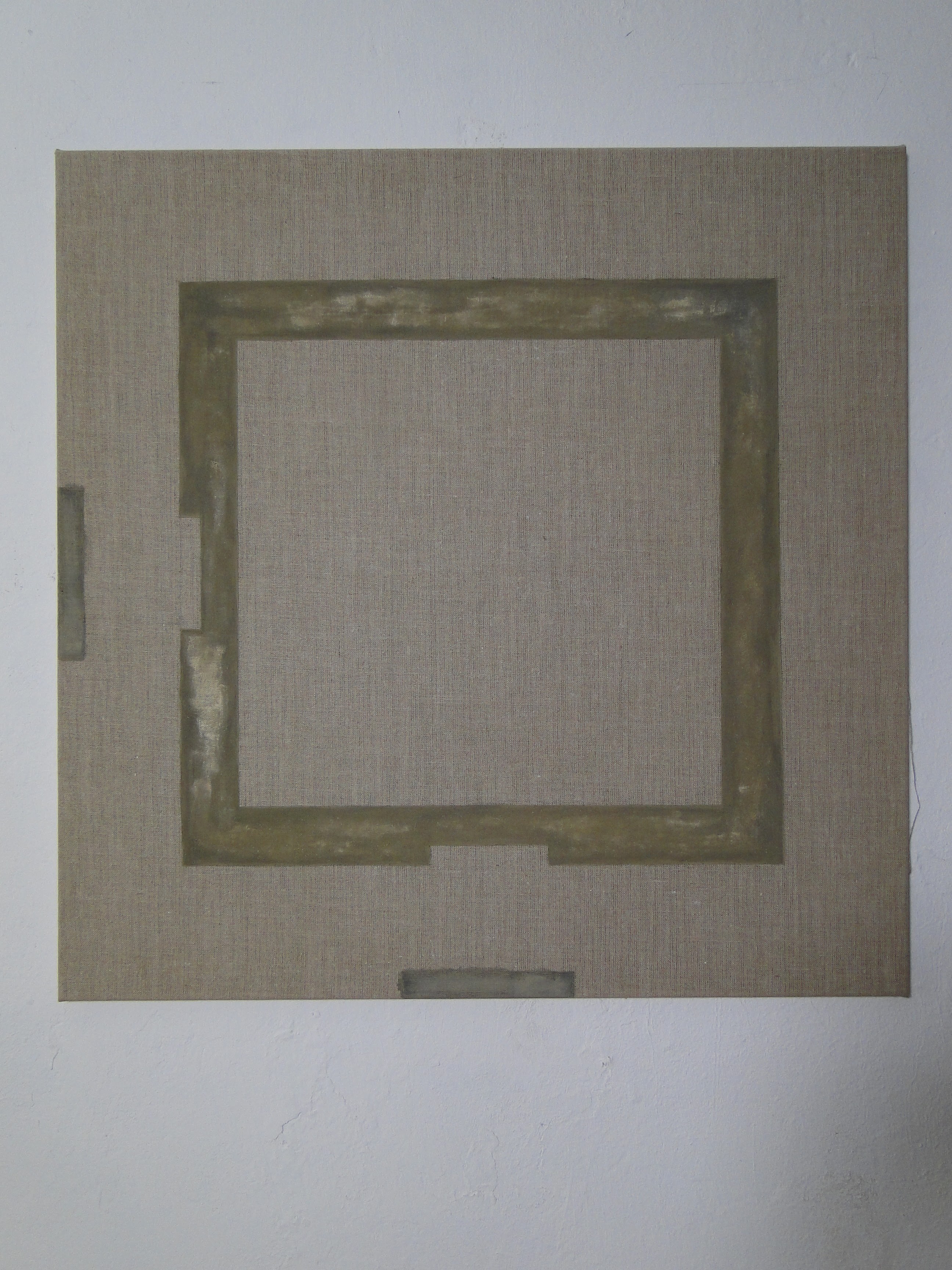
 (image above: artist at the studio, 
painting on the wall: Basic Form , 2004, 
Pigment and Japanese ink on canvas, 79 x 79 inches )

Connection of sky and earth, an invited design; 2014; Cement, granite, water ; 177.2 x 70.9 x 13.8 inches; photo credit Florian Holzherr.
In the Middle Ages, belief in God coincided with enthusiasm for all human knowledge. And for the Bavarian artist Reinhard Blank, interestingly, loyal faith does not ever mean the rejection of new ideas. The channeling of creative energies into religious art and architecture requires discipline and economy of expression, and thus is an eminently suitable outlet for Blank's art. There a harmony between science and religion - "to imagine [them] as two separate, inevitably antagonistic opponents, ... is far too simplistic." [2] 

Blank, a son-in-law of Taiwan, has been inspired both by Asian and Germany philosophy. For example, he located his Spiritual Garden on a hill behind his studio. This piece is a set of four walk-in wooden sculptures connected by a metal walkway, and there we find that he has combined natural strength and spiritual softness; Spiritual Garden is rational, minimal and conceptual. The small cabins can function as personal studios of meditation, as cozy tea houses, or merely as a set of sculptures. Blank spent time studying with a Japanese tea master to learn a sophisticated tea ceremony, and drinking tea has become part of his daily living style. In his minimalism, instead of splashing his emotions about, the artist is revealed by his recurrent use of materials that can be returned to nature: earth pigment on unprimed canvas, water, and steel. This is not surprising in the son of a farmer with academic art training. Blank always wears a humble smile, whether because or despite his pursuit of complex philosophical ideas.

Sky Mirror, 2007, Steel, granite, water,
 138 x 81 x 18 inches. Private collection

Blank's art, as is most apparent in his church features design, turns out to be an expression of mathematical statement. It is as remarkably tuned and transformed as the work of scholars and monks of the middle ages who discovered the mathematical nature of the universe which they proclaimed as yet another testament to the glory of God. Blank is highly trained in the ideas of the Bauhaus School in Design and Art in Germany , in industrial design, simple abstract design; as a machinist; and as a researcher and devotee of philosophy. At the same time, he needs to immerse himself in natural environments such as his beloved Allgäu region of Bavaria. So in lieu of standing solely in a spiritual context, Blank bases his work on his technical arts training, his internationally recognized professional qualifications. and his use of universal and fundamental methods in a purpose-designed space. Blank's works investigate natural mystical and futuristic imagination, thus encompassing the lines and structure of intriguing expectation.


From Blank's statement, we learn his work not only aspires to a type of "reductive art" or minimal aesthetic but also an exposure of means. 'You see not only "what you see" ... but how [it] got there, in the normally regular but nuanced not (melo)dramatically but subtly expressive, wake of the brush.' [3] Blank expresses purity in his works and has a precise grasp of the subtleties of three-dimensional shape. This is apparent in his flat paintings. Minimalists choose to let the art object present its own characteristics. 

The essential composition shows the geometry of Blank's work and is more like Bauhaus's ingenious design and follows his literacy of the void, where solidity and emptiness are interlaced and complementary. In his sculpture, Blank uses steel and water to represent contrasting states constrained in time and space with mathematical rigor. "Natural philosophy" refers to the drive to draw moral and spiritual wisdom from God's creation. This natural philosophy embraces the over-arching languages of mathematics and theology and bends human invention to decipher appearance and the invisible. It has no restriction and harmonizes thought of such diverse thinkers as Aristotle, Thomas Aquinas, Erasmus, Isidore of Seville, and later Isaac Newton. 

One of Blank's landscape sculptures, Sky Mirror, was commissioned for a garden and combines small ponds , water and steel into sculpture. Thus natural landscapes are contained in and complemented by soothing minimalism. The structure, is in perfect harmony with the garden, dialoguing with its numerous rare flowers and plants. Another imaginative use of reflection may be found in one of his church door designs where glass in a small cross reflects the grassy area in front of the church. Elegant and carefully calculated composition in steel and flowing water can be found in many of his sculpture pieces. In Sky Mirror, the variation in the flow of water, and consequently in the configuration of the water surface, induces a corresponding change in the reflection of the sky and the ambient light, which is particularly mesmerizing. The work catches and re-radiates the changing mood in the nature environment and the passage of the seasons, and even in its stillness is dynamic.  

[3 images above: Invited design of the Dr. med. Weidlich medical hospital, include the outdoor entrance, and interior wall pieces.]

In Blank's paintings, sculpture and outdoor design, we find the perpetual intrusion and extrusion of shapes, frequently by means of an inward missing part balanced by an outward addition. This produces an atmosphere of harmony and calm, while exhibiting a clean form that is structured and balanced with regard to cultural and social catalysts. In Taoist terms, the opposing forces of Yin and Yang juxtapose negative and positive in a rhythmic and musical inspiration. We find consistently demonstrated two versions of a familiar or understandable formula accompanied by an idea that embodies both medieval mystical existence and modern minimal self-sufficiency. While possibly not acknowledged by those viewers preoccupied with ornamental culture, Blank's work is in a way unparalleled in scale intellectually, ideologically, or even politically. It leads to a sense of hidden forces bringing to life another art ideology.

W. J. T. Mitchell [5] delves into the relation between word and image. While the former is the traditional domain of art history, if “art history aims to become a critical discipline, one that reflects on its own premises and practices,” then it must draw inspiration from and utilize the tools of semiotics, structural linguistics, grammatology, discourse analysis, rhetoric – and yes, even philosophy. Blank’s unique blend of minimalism, design, mathematics, and philosophies both Eastern and Western, is an example par excellence of art that demands to be analyzed in Mitchell’s terms – to be appreciated on a purely visual level, but then more fully contextualized.

 References:

[1] Seb Falk, The Light Age: the Surprising Story of Medieval Science, WW. Norton & Company, 2020, p.4.
[2] ibid., p 5.
[3] Edward Strickland, 'Paint", Minimalism: Origins , Indiana University Press, 1993. p. 110.
[4] Gregory Battcock, Minimal Art: A Critical Anthology , University of California Press, 1995. p.181-185, p. 260-262
[5] Critical Terms in Art History , Nelson and Shiff, eds. University of Chicago Press, 1996, P 48.

David Elliot, Making Sense of Things, ed. Carin Kuoni, Words of Wisdom, Independent Curators International (ICI), NY. 2001.

Artist Statement

What I am looking for is the simplest forms to comprehend the world. I dedicated most of my time and energy to philosophy. Inspired by artist Piet Mondrian, art historian Hans Joachim Albrecht, and influenced by ‘Structures and Dynamics of Theories’ of Wolfgang Stegmüller, I transformed my artwork toward rational and conceptual expression by means of geometric structures. Lacking ornamentation, radically simplified geometric forms are grounded in Earth symbolism and demonstrate my concerns with the world, the body, the mind, and the spirit. I use a rational structure design result correlating width, length, area, volume, proportion, space, the mass, weight, and Fibonacci sequence to promote an aesthetic view and effect, and also respond to visual interpretation with implicit and metaphorical statements in a systematic style. My artwork is a product of a specific focus on the world that we live in and serves as a mirror for ourselves. At the beginning, we are embedded in a predetermined but unforeseeable background; however, continued and inevitable interactions reformat and re-shape us. In my artwork, I try to develop a harmonious, meditative character that promotes contemplation of both the rationality of the human intellect and its limitations. This reveals my innermost concern with consciousness – a seemingly comprehensible, mechanical structure, modified by a transcendence beyond the limits of rationality and hence unknowable.


Other Internet Profiles:

  • Artist Reinhard Blank web page    https://reinhard-blank.de/
  •  Reinhard Blank 的後花園小屋雕塑- 揭秘這一位德國巴伐利亞的小鎮藝術家
https://ll-greenyes.blogspot.com/2019/01/reinhards-spiritual-garden-bad.html
  • Art as Implicit Substance 存在中的真實
https://ll-greenyes.blogspot.com/2019/08/reinhard-blank-art-as-implicit-substance.html 
  • Reinhard Blank: Venice 2019 exhibition preview video link:
https://youtu.be/CumOffw0M28 
https://zeitmaschine-stadtmuseum-mm.de/de/ausstellungen/sonderausstellungen
  •  德國巴伐利亞地區梅明根市-田園詩般的工業小城 Memmingen, Germany
https://ll-greenyes.blogspot.com/2013/09/memmingen-germany.html

 More Reinhard Blank art work images to view:

Entrance to Church of
Saint Martin in
 Memmingen, Germany, 2017.
 Glass and steel,
134 x 102 inches,
 photo credit Andreas Marx


Shadow of the Mind; 2007, Steel, Japanese paper,  glass,
20.5 x 16.5 x 5 inches/each


Introspection, 2015, Pigment on canvas, 21.5 x 21.5 inches


Twelve Apostles; Steel, copper, and glass;
invited design of the main door of
church Kinderlehrkirche,
2011 built in Memmingen, Germany


Interaction - Minimalsystem der Selbstreferenz III; 2004, Steel, 64 x 64 x 45.7 inches.
The crumbling surface of the metal can be seen via time lapse photography.


Sky Mirror, 2007, Steel, granite, water; 138 x 81 x 18 inches. Private collection. 


Śūnyatā" Fountain; an invited design for the garden of a yoga practitioner ,
2010, Cement, 39.4 x 47.2 (diameter) inches.
Śūnyatā (Sanskrit) is a Buddhist concept often construed as emptiness and sometimes voidness.


About the artist:

Reinhard Blank , Born in Memmingen, Germany.

MFA (master class diploma), The Academy of Fine Arts, Munich , Germany

Selected Awards / Honors
  • Arts Prize of City Memmingen (Kulturpreis der Stadt Memmingen), Germany.
  • Special Artist Prize (‘Künstlersonderpreis’), Künstlerhaus, Marktoberdorf, Germany.
  • Artwork - Raum Skulpturen ‘Garten der vier Eletmente‘ selected in publication, as one of the model and architectural inspiration in the Allgau region during 2013-2018 by Architektforum e.V. , a selection once in five years, reviewed by an international panel of professional architects.
Selected Solo Exhibitions
  • Visual Structure Theory -Tractatus of Ludwig Wittgensteins, associated with a lecture ‘how to reconstruct Wolfgang Stegmüller’s Interpretation of Tractatus, a theoretical model of Ludwig Wittgenstein’s in a visual form’, University Ulm, Germany.
  • ‘Aesthetics of Void’, Kreuzherrnsaal, Memmingen, Germany.
  • ‘Poesie der Unterscheidung’, Schloss Hohlenheim, Stuttgart, Germany.
Selected Group Exhibitions
  • "experiment konkret - Eugen Komringer zum 80.", Museum für Konkrete Kunst, Ingolstadt, Germany.
  • “Sammlerkonzepte“, Kunstspeicher Museum, Würzburg, Germany.
  • Anniversary Exhibition, Künstlerhaus, Marktoberdorf, Germany.Selected Public Art/Design
  • ‘Interpretation from Trinity with “Minimalsystemen der Selbstreferenz”’ Ceiling Design –(size 99 m²)., Trinity Church (Dreifaltigkeitskirche), Ravensburg, Germany .
  • Corridor and Worship Room Design for Arche Slowenien, Medvode Slowenien.
  • Invited design of the entrance and souvenir area of St. Martin's church, Memmingen, Germany.
Selected Collections
  • Municipal cultural department, Memmingen, Germany.
  • Municipal cultural department, Kempten, Germany.
  • DG-Bank, Hohenkammer, Germany.
  • Selected Publications
  • Minimalsystem der Selbstreferenz. Malerei im interkulturellen Dialog, Gallery Akzente 2001, Memmingen, Germany.
  • essay – Teezeremonie und Spiritueller Raum - Überlegungen zu Wahrnehmungsformen von Transzendenz, published in Journal ‚Spiritual Care‘ volume 8(1) 2019, p. 67-75, DE GRUYTER, Germany.
  • essay – Ent-täuschung – Spiritualität in book “ Spirituelle Erfahrung in philosophischer Perspektive”, p. 161-167, Walter de Gruyter Berlin, Germany.
Teaching
  • 1991 - 1998 P rincipal of School 'Schule für Gestaltung', Teaching ‘philosophy of fine art,’ Ravensburg, Germany.

Contact artist:

Reinhard Blank

Thalatelier Reinhard Blank, Unterthal 33a, 88730 Bad Grönenbach -Thal Germany

email: info@reinhard-blank.de


Thursday, December 3, 2020

Yen-Hua Lee : Value and Appearance of Observing Silence

Artist to Watch : Yen-Hua Lee 李燕華

Value and Appearance of Observing Silence

"Rather than love, than money, than fame, give me truth." ― Henry David Thoreau (1817-1862)


Tomorrowland, ballpoint pen ink on book page, 
8 1/4 x 6 3/4 in., 2014~2019. 
From the Book project series,
Courtesy of the artist

by Luchia Meihua Lee-Howell

In the search for value of symbolic art, an argument may be made for the importance of a distinction between appearance and reality,[1] This analysis is based on the cultural forms that underlie our own social values and which can be discovered in historical ritual secrets and cryptography. This value is available equally to the whole and individually in learned disquisition, and at the same time encounters irreducible subjectivity between private subjectivity and social reality. Yen-Hua Lee's experience with symbol-like images allows her to conceive a form or content of hieroglyphs. It is the backtext for her otherwise mystifying black images that mediate the true nature of the hidden substrata of the reality of life. 

For a stylistic analysis and iconographic interpretation, I have placed Lee’s art in the cultural realm of anthropology, and more particularly in a home/family context where it participates in visual communication. Her artistic treatment and transformation of the human figure leads to images that resemble low-relief carvings and finely incised scenes. 

The shape of the figures and the outer contour of the face are echoed in a series of concentric edges which radiate outward from the center; the lower edge of images depicts a single ground line. While detail has been eliminated and narrative abridged or at least channeled, this works to highlight a lively shape and imperative body gestures. The group of works are identified as forming a system of visual contemplation. 

Lee remarks "I want to take a deep breath in the country of freedom. In the country of freedom, I want to escape the embarrassment of real society. In the country of freedom, I want to find the person I want to be. Is it okay? Is it really possible? Yes, just be the original you." [2] 

In her Home series, Lee stacks the memories of life, discovers the rituals of life, and develops the inner energy. She roots the work in a concept of "home" as people seeking a space in which the soul should not be afraid and not be lonely. Therefore, when the audience walks up to the piece that she constructed, it can experience, in both body and mind simultaneously, a calm, inward space. 


Home project (2012~Now) , 
Searching for spiritual home series (Berkeley and San Francisco), 
dimensions variable, Courtesy of the artist. 
Home is a place of spiritual and physical protection. 
People have always wanted to know how to establish a harmonious home, 
but the search invariably involves a long, drawn-out process with its own memories of time 
that force us to reconsider the relationship between people and home.

For her “Book project,” Lee chooses books by authors from past ages. What she is curious about is how books communicate with people today after a considerable time has passed since they were written. She accords priority to a type of "linear reading", which is through the image, lines, and light with wind to arrange a space that can dialogue with viewers. When the wind blows the pages, they are opened for reading, and a societal phenomenon and value viewpoint is released. She makes full use of visual symbols appended to the texts in parallel to the contents. When we open the book page, it shows mirror reflections corresponding each to the other. In some works she uses both Chinese and English language books to create a conversation. Most of her works present images that carry a concept of “time” and “memory”. When we turn the page, it is similar to opening a memory. 

The works in the Search for spiritual home series, often grotesque in appearance, seem to represent a shaman’s power spirit. There is no decoration, but a strong symbolic indication of ritual, emblem, and a secret society inhabited by spirits. The anthropomorphic figures on the wall seem to be a mixture of human and effigy serving as ceremonial symbols. 

The light background color creates a negative form next to the figure pattern. As has been remarked in another context, “sometimes this negative form can be read as a positive form creating an ambiguity between figure and ground. This reversal of figure and background is common in Kwakiutl art.” [3] Ritual, although sometimes irrational, affords security and provides an order to the chaos of life. We may say "in visual arts, rituals also surround each work, marking key points in the creative process, as well as in its exhibition, viewing, and discourses on signification." [4] One might say that Lee invented a ritual: reading as a means of remembering. Lee constantly uses signifiers to construct her work and extend the viewer's imagination. We find many shapes - from houses to bottles - in her works to project the idea of containers that can protect our existence, provide a healing place and power of story transferred. The rice paper she likes to use is very thin, fragile, and easily damaged - and thus a perceptive metaphor for our lives. Further, making art with such delicate materials requires slow deliberation and careful attention to detail, as does living daily life. In this way, value and appearance resonate one with the other. 

Her installations are site-specific works that change the space to a transition of mind and home. She combines clues, beams, energy, light and shadow, and connections, and also guides the audience to watch and find directions. Lee emphasizes the connections between history and memory of the location that could be your village, community or city. The line is an element that allows the artist to connect the history and memory of her audience with herself. This line constitutes the form and the past of the previous "home”. In terms of structure, it shares an awareness with architecture, and she also hopes to use these clues to make people explore the past, and then to further look at the relationship between her inner home and the creative home.[5] 

 Image above: Container, ink on book page, 9 x 12 in., 2014~2019, Courtesy of the artist

Lee said her work is inspired by calligraphy, indigenous culture, and ceramics. Her flat black silhouette painting style has the feeling of thick calligraphy. The sculptural nature of pottery and porcelain makes her thinking more three-dimensional, an outlook seen notably on a series of outdoor billboards. The visual images, inseparable from her signature black symbols, are the conduits and reflections of her artistic intuition. Rising directly from her unconscious, they are thus internalized into a kind of insight and presented.

What is "reasonable" and "normal" in our society is not necessary so in another. [6]"A means of heightening the difference between "ordinary" and the "strange" ,....related contradictions serves as an important impetus for artistic expression with artists seeking to create a sense of order (rationally, logically) out of conditions characterized more generally by features of confusion and contradiction."[7] 

Lee writes words on the book-thick pages to express emotional communication with the author's work. In her view, the book carries the meaning of words, yet also the content and memories of the times. Reading is a mode and behavior of people's seeing. Through reading and paper transmission, people's stories and memories are evoked. The memory presented by humans is like the missing page. Through the visual reading of the artist exploring the extension of the paper after flipping, the audience creates visual language between viewing and staying between pages, and new content and multi-layered meanings are generated through time interlacing. 

While Lee's art employs a discourse on allegorical and spiritual interpretations to reveal a hidden meaning for modernity, the line-connected symbols must be carefully interpreted to avoid being "conceived as antithetical to the modernist credo Ill faut etre de son temps." [8].

She courageously transforms the most subjective to a objective expression in which the verbal is expressed as visual.

Right: Packaging
Ink on book page, 
7 1/2 x 10 in., 2014~2019, 
Courtesy of the artist
Left: Boat and bike,
ballpoint pen ink on book page, 
7 1/2 x10 in., 2014~2019,
Courtesy of the artist


Crying in the rain, Ink on book page, 7 1/2 x10 in, 2014~2019, Courtesy of the artist


Book project series, ink on book page,  7 1/2 x10 in, 2014-2019
 Courtesy of the artist