Thursday, June 23, 2022

Tuesday, June 21, 2022
From Urban Reverence to Urban Divergence exhibition : venue 1- Pfizer

The centrifugal tendency in the transition from the rural village to the urban is the loss of cultural rituals and myths, the need to adapt to the new language and the loss of innocence. Art creators are able to mediate and textualize new connections to the threat to culture and most particularly its antecedents.
The series of Urban
Tribes projects started in 2018 to examine from an art perspective the
phenomenon of migrants forming an international cross-cultural "urban
tribe" – one of the genres at the turn of the 21st century. The discourse
thus moves to valuing human nature, preserving multiple cultures, renewing the
environment, and honoring the new multi-faceted unity. Potential political,
economic, and cultural crises can be averted only by an emphasis on the
diversity of life that promotes interactive relationships.
Luchia Meihua Lee
co-curators: Jennifer Pliego, Sarah Walko
Participating artists:
1.
Herberto Turizzo
Anaya
v
Exhibition
dates: June 10 through July 23, 2022
v Exhibition venues 1:
1st Floor, IW Art Gallery
5th Floor, old Pfizer
building, 630 Flushing Ave, Brooklyn, NY 11206
v Satellite exhibition:
· Exhibition dates: June 24 through July 23, 2022
· Exhibition venue 2: Valerie Goodman gallery, 315 E 91st St, New York, NY 10128
Friday, April 22, 2022
Contemporary Taiwan Art in Context
By Luchia Meihua Lee
Outside In-New Realm for Taiwan Art, 2008
TAIWAN AND THE WORLD
The vernacular of contemporary art
in Taiwan has been shaped in large part by its geography as an island and its
access throughout history to manifold influence from abroad, from countries including
Spain, the Netherlands, and Japan. I the 1970s, Taiwan’s economic boom
enabled many students to study at western art institutions, and a new generation of artist quickly became skilled at
incorporating outside influences into their own styles.
Local influences, however, came to play as large a role as the global, and an ethos emphasizing Taiwan artistic individuality swept the island in the 1970s. The establishment of museums and alternative art spaces in Taiwan marked a milestone in the availability of resources for Taiwan contemporary artists. This growth in public interest in art enable Taiwan to cultivate an artistic dynamism and become a setting for work that reflected uniquely local concerns and sensibilities. In addition, the heritage drawn from both the South Pacific islanders, who constituted Taiwan’ original settlers, as well as that from mainland China, have become interesting fulcrums by which “local” art was and continues to be defined.
Artist in Taiwan today are faced with questions that confront all artists around the world. With rapid growth in communications, artist cannot help but be affected by ideas from across the globe and inspired to join international art movements. In Taiwan, this has been accompanied by migrations to the U. S. and Europe, not only of students from Taiwan but also of established members of the Taiwan art community, including artist, art historian and curators. At the same time, members of the Taiwan art community do not want to neglect their local heritage and traditions. This tension between embracing the influence of international contemporary art and finding a native voice has asserted itself artistic identity in the midst of the 21stcentury’s ever shifting “global village.”
TAIWAN AND MAINLAND CHINA (PRC)
In recent year, East Asia has experienced an economic boom
as well as an upsurge in international public interest. In particular, artists
from mainland China have achieved a high profile and prices for their works
have reached new height. However, artist from Taiwan have not gained access
into this elite circle. This applies equally to artists in Taiwan and to
artists from Taiwan living in the U.S. or Europe.
Artist mainland China and Taiwan share many of the same traditions, techniques and influences. Yet for myriad reasons, the vernacular of each body of work can, in some cases, be strikingly different. Although a common method by which to try to define the nature of Taiwan art is to compare its aesthetics and subject matter with that mainland Chinese art – vice -versa-such comparisons can be reductive. Nonetheless, viewing art from Taiwan and mainland China in a mutual context can provide fascinating insight into both the history and contemporary developments of Chinese art as a whole.
BEING “OUTSIDE IN”
The artists showcased in Outside in have dual outsider
status. Not only do they engage on the outskirts of the booming Chinese art
market,
Which is dominated by artist from mainland China, but in
order to find a market for their work, many of them have chosen to work and /or
sell their art abroad. Artists are perhaps most original and useful to society
when they stand outside of it, however the individuals represented in Outside
In are far from marginalized. Active in the United States, Europe and beyond,
they continue making new spaces-international local-for their artistic
expression.
One question that has arisen for many of the artists in this exhibit is what it means to self-identify as a Taiwan artist when they are no longer working, living, and /or selling art in Taiwan. Some are given the label “International artists” while others have chosen this term to identify themselves. Other artists have been lumped together with artists from Mainland China in exhibitions with no mention of their Taiwan origin. Artistic identity plays a large part in the concept behind Outside In.
In this exhibit, we choose not to address the political issues facing Taiwan or its artists; instead, we would like to take a more expansive view of the world of contemporary art, and the dimensions of being both “Outside” and “In.” Some of the themes recurring in this exhibit are alienation and alliance in its various guises and the relationship between humans and their environment.
A BRIEF HISTORY OF CONTEMPORARY ART IN TAIWAN
The end of World War II and the transfer of Taiwan to the Republic
of China, follow by the relocation of the ROC government to Taiwan in 1949.marks
a watershed moment in the development of Taiwan art. With the concurrent
resurgence of the literati tradition, there was conflict at first between older
styles and those more recently developed. This conflict eventually turned into
a fascinating interaction and tendency in artistic communities to embrace both
old and new in creating art.
As mentioned, Taiwan turned inward in the 1970s, focusing even more on its various art forms. What is known as the Museum Age ensued, spurring the growth of alternative art spaces which championed feminism, ethnic diversity, and pluralism. New ideas abounded, with a resultant renewed effort to incorporate Western styles and various art forms into Taiwan contemporary art.
The creative impulses if Taiwan artists were further deepened by the lifting of martial law in 1987. Greater access to the free flow of information resulted in many students becoming more globally aware and traveling overseas to study art. OF equal importance was the economic boom that Taiwan experienced during this time, which spurred even greater government support for the artis. Artists active during this time felt the effects of a more economically and politically open atmosphere, resulting in growing artistic self-confidence and an overwhelming diversity in subject matter.
Taiwan artists, having drawn upon such myriad sources, have
often exercised their right to criticize state and society. Yet and equally
large number of artists have produced works that are more peaceful and introspective.
The contrast between these two popular but very different movements serve to
highlight the immense range, variety, and vitality of styles currently
flourishing in Taiwan contemporary art. Such diversity and dynamism can be observed
in the sheer variety of artistic activity, including but certainly not limited
to, the re-invention of tradition, the development of postmodern art and the proliferation
of politically and socially-conscious art. Particularly in recent years, digital
art and the use of new media has been gaining ground. Likewise, the art
historians and scholars who have kept pace with these progressions are more
widely explorative than their predecessors. Spurred in part by advances in government
and in cultural policies, these developments have also had a significant effect
upon the evaluation and growth of the art market land have vaulted the art communities
of Taiwan into a singular position in relation to mainland China, Asia at
large, and the international art world.
Curatorial supporting
essay for the exhibition
Outside
In-New Realm for Taiwan Art, 2008
Weatherhead, East Asian Institute, Columbia University, New York City
Thursday, April 21, 2022
Smooth the image of the world : Wu Lan-Chiann
Wu Lan-Chiann:
Smooth the image of the world
by Luchia Meihua Lee
In these past few years, horror and delight have alternated, and swelling painfulness has tested our endurance. Perhaps we haven't changed enough to ameliorate the inequities in many social subjects. In Wu’s art work, we find a view of a world not ordinarily seen, an alternative to the endless violence of our time space. Her extraordinary paintings possess a mythical quality and profoundly touch the core value of nature that is missing from urban life, and function as a salve beyond the material world.
Born and raised in Taiwan, Wu lives and works
in Los Angeles. She holds an MA from New York University’s Fine Art Department.
Cross-cultural fusion has operated remarkably in her art to form a sensuous,
organic, sleek and hermetically wider embrace as a contemporary Asian women
artist.
Lucy R. Lippard" mentioned in 1975 "It is no coincidence that the women artists’ movement emerged in a time of political travail and political consciousness," 2 also pointing out the emphasis by the women’s movement on social structures that have oppressed women. In this vein, I identify this Taiwanese American woman artist, Wu Lan-Chiann as a minority's minority immigrant in US society. This is not an attempt to create distance from the official ideological universe about the patriarchal hegemony, but to lay emphasis on national identity among Taiwanese-Americans.3 However, Wu has also averred with Lippard that these social movements can provide heightened awareness of the multi-cultural model, which "could indicate a way to move back toward a more basic contact between artist and real life.”4
Wu’s art is notable for a certain veracity resulting from the "deliberate modesty of format [and] displacement of literary sensibility into the fabric of the visual."5 I eschew an intellectual statement about female artists in general, while trying to make sense or identify sources that communicate with Wu's statement and experience, and thus follow her emotionally. When we embrace art by a woman, we too often celebrate delicacy, elegance, and softness. Thus, we can acknowledge the uniqueness of this great visual representative imagery.
Her work is subtle in its details and tactile in its veiled-like application. Upon first impression, the strength of Wu's painting is its connection with traditional brush ink painting. I do not intend to examine the nature of her precedents, but underline the way in which she has modernized and advanced the brush ink tradition. Wu has not only chosen entirely different subjects than classical shan shui (literally, "Mountain and water" which means landscape) exponents,6 but also given an entirely different treatment of light.
I have found undeniable pleasure in these paintings’ visual expression, from the pictorial techniques to the aesthetics and philosophy. In her Precious Light series, one can easily find the commitment to smooth muscle base. Cursory inspection might deem these paintings flat, but further study reveals subtle colors and application of foggy gradients. Sometimes jet black in blurred light, they strongly develop a quiet depth of harmonic power in the dark night.
In Perseverance, one’s gaze is directed to the tree’s vigorous bark recalling a snake skin, around which interlocking pine needle-laden branches stagger. In traditional Chinese brush ink painting of pine trees, the artist aims not for a realistic effect but a symbolic representation of the independent stance of the literati. So Wu’s detailed rendering of the bark of her pine tree underlines the freshness of her approach, and a reorientation of the pine’s significance.
The nature landscapes display a type of rhythm which seems discordant but not struggling. They are the basis on which she seeks to transcend cultural boundaries and create a timeless commentary on humanity. Wu believes in her art’s power to heal and unite, to express universal humanistic values through and her core conviction that we are one people.
The artist writes that, "art speaks a universal language that people understand across time and place. People enter this world defenseless and curious, share the same hopes and fears, act out of kindness or spite, and go through the same stages of sorrow and grief. "
The
evergreen nature of pine trees is a symbol of longevity and perseverance in
Chinese culture.
Wu
painted Perseverance in response to the global pandemic; while
people around the world long for life to return to normal, it takes real
perseverance to wait for that day. Perseverance is an innate human strength
that Is evident only in difficult and challenge times.
______________________________________
1. Hay, J. "Mu Xin and Twentieth-Century Painting", The Art of Mu Xin: Landscape Paintings and Prison Notes. Yale University Gallery, 2001. pp. 28-39.
2. Lippard L.R. "The Women artist' movement-What next? The pink Glass Swan, The New Press, 1995. pg.81.
3. Salecl R. "National Identity and Socialist Moral Majority", New Formations. Routledge, 1990. pg. 25-31. I have tried to avoid simple criticism of the nationalism of Chinese in PRC, but this essay about the opposition moral majorities and authoritarian-populist Communist parties which "have built their power by creating specific fantasies of a threat to the nation and so put themselves forward as the protector of 'what is in us more than ourselves - our being part of the nation.' This analysis applies exactly to the record of the Chinese Communist Party, which has relentlessly and radically assaulted all traditional points of social identification, leaving a chauvinistic nationalism intertwined with support for the party and identifying all foreigners as the feared "Other" as the only remaining public fantasy available to the Chinese.
4. ibis. Lippard L.R. pg. 81.
5. ibis. Hay, J. pg. 36.
6. Lee, L. & Sibergale, J. Zhang Hongtu: Expending Visions of a Shrinking World, Duke University Press. 2015. pg. 160.
7. Lee, L. Meditation in Contemporary Chinese Landscape, 2008 Godwin-Ternbach Museum, Queens College, CUNY
Monday, April 5, 2021
Rewoven: Innovative Fiber Art - Filmed by Victor Peña
Saturday, March 27, 2021
Reinhard Blank
The Substance of Balance in Implicit Strength
by Luchia Meihua Lee

 |
| Connection of sky and earth, an invited design; 2014; Cement, granite, water ; 177.2 x 70.9 x 13.8 inches; photo credit Florian Holzherr. |
 |
| Sky Mirror, 2007, Steel, granite, water, 138 x 81 x 18 inches. Private collection |
From Blank's statement, we learn his work not only aspires to a type of "reductive art" or minimal aesthetic but also an exposure of means. 'You see not only "what you see" ... but how [it] got there, in the normally regular but nuanced not (melo)dramatically but subtly expressive, wake of the brush.' [3] Blank expresses purity in his works and has a precise grasp of the subtleties of three-dimensional shape. This is apparent in his flat paintings. Minimalists choose to let the art object present its own characteristics.
The essential composition shows the geometry of Blank's work and is more like Bauhaus's ingenious design and follows his literacy of the void, where solidity and emptiness are interlaced and complementary. In his sculpture, Blank uses steel and water to represent contrasting states constrained in time and space with mathematical rigor. "Natural philosophy" refers to the drive to draw moral and spiritual wisdom from God's creation. This natural philosophy embraces the over-arching languages of mathematics and theology and bends human invention to decipher appearance and the invisible. It has no restriction and harmonizes thought of such diverse thinkers as Aristotle, Thomas Aquinas, Erasmus, Isidore of Seville, and later Isaac Newton.
One of Blank's landscape sculptures, Sky Mirror, was commissioned for a garden and combines small ponds , water and steel into sculpture. Thus natural landscapes are contained in and complemented by soothing minimalism. The structure, is in perfect harmony with the garden, dialoguing with its numerous rare flowers and plants. Another imaginative use of reflection may be found in one of his church door designs where glass in a small cross reflects the grassy area in front of the church. Elegant and carefully calculated composition in steel and flowing water can be found in many of his sculpture pieces. In Sky Mirror, the variation in the flow of water, and consequently in the configuration of the water surface, induces a corresponding change in the reflection of the sky and the ambient light, which is particularly mesmerizing. The work catches and re-radiates the changing mood in the nature environment and the passage of the seasons, and even in its stillness is dynamic.


 |
| [3 images above: Invited design of the Dr. med. Weidlich medical hospital, include the outdoor entrance, and interior wall pieces.] |
W. J. T. Mitchell [5] delves into the relation between word
and image. While the former is the traditional domain of art history, if “art
history aims to become a critical discipline, one that reflects on its own
premises and practices,” then it must draw inspiration from and utilize the
tools of semiotics, structural linguistics, grammatology, discourse analysis,
rhetoric – and yes, even philosophy. Blank’s unique blend of minimalism,
design, mathematics, and philosophies both Eastern and Western, is an example
par excellence of art that demands to be analyzed in Mitchell’s terms – to be
appreciated on a purely visual level, but then more fully contextualized.
[1] Seb Falk, The Light Age: the Surprising Story of Medieval Science, WW. Norton & Company, 2020, p.4.
[2] ibid., p 5.
[3] Edward Strickland, 'Paint", Minimalism: Origins , Indiana University Press, 1993. p. 110.
[4] Gregory Battcock, Minimal Art: A Critical Anthology , University of California Press, 1995. p.181-185, p. 260-262
[5] Critical Terms in Art History , Nelson and Shiff, eds. University of Chicago Press, 1996, P 48.
David Elliot, Making Sense of Things, ed. Carin Kuoni, Words of Wisdom, Independent Curators International (ICI), NY. 2001.
Artist Statement
What I am looking for is the simplest forms to comprehend the world. I dedicated most of my time and energy to philosophy. Inspired by artist Piet Mondrian, art historian Hans Joachim Albrecht, and influenced by ‘Structures and Dynamics of Theories’ of Wolfgang Stegmüller, I transformed my artwork toward rational and conceptual expression by means of geometric structures. Lacking ornamentation, radically simplified geometric forms are grounded in Earth symbolism and demonstrate my concerns with the world, the body, the mind, and the spirit. I use a rational structure design result correlating width, length, area, volume, proportion, space, the mass, weight, and Fibonacci sequence to promote an aesthetic view and effect, and also respond to visual interpretation with implicit and metaphorical statements in a systematic style. My artwork is a product of a specific focus on the world that we live in and serves as a mirror for ourselves. At the beginning, we are embedded in a predetermined but unforeseeable background; however, continued and inevitable interactions reformat and re-shape us. In my artwork, I try to develop a harmonious, meditative character that promotes contemplation of both the rationality of the human intellect and its limitations. This reveals my innermost concern with consciousness – a seemingly comprehensible, mechanical structure, modified by a transcendence beyond the limits of rationality and hence unknowable.
- Artist Reinhard Blank web page https://reinhard-blank.de/
- The Substance of Balance in Implicit Strength https://conta.cc/3lSYcZk (of Constant Contact e-blast page)
- Reinhard Blank 的後花園小屋雕塑- 揭秘這一位德國巴伐利亞的小鎮藝術家
https://ll-greenyes.blogspot.com/2019/01/reinhards-spiritual-garden-bad.html
- Art as Implicit Substance 存在中的真實
https://ll-greenyes.blogspot.com/2019/08/reinhard-blank-art-as-implicit-substance.html
- Reinhard Blank: Venice 2019 exhibition preview video link:
https://youtu.be/CumOffw0M28
- Reinhard Blank “AusZeit - Art as Clarification, Stadtmuseum Memmingen ( to view Reinhard Blank “AusZeit - Art as Clarification at The Memmingen City Museum)
https://zeitmaschine-stadtmuseum-mm.de/de/ausstellungen/sonderausstellungen
- 德國巴伐利亞地區梅明根市-田園詩般的工業小城 Memmingen, Germany
https://ll-greenyes.blogspot.com/2013/09/memmingen-germany.html
More Reinhard Blank art work images to view:
 |
| Entrance to Church of Saint Martin in Memmingen, Germany, 2017. Glass and steel, 134 x 102 inches, photo credit Andreas Marx |
 | ||
| Shadow of the Mind; 2007, Steel, Japanese paper, glass, 20.5 x 16.5 x 5 inches/each |
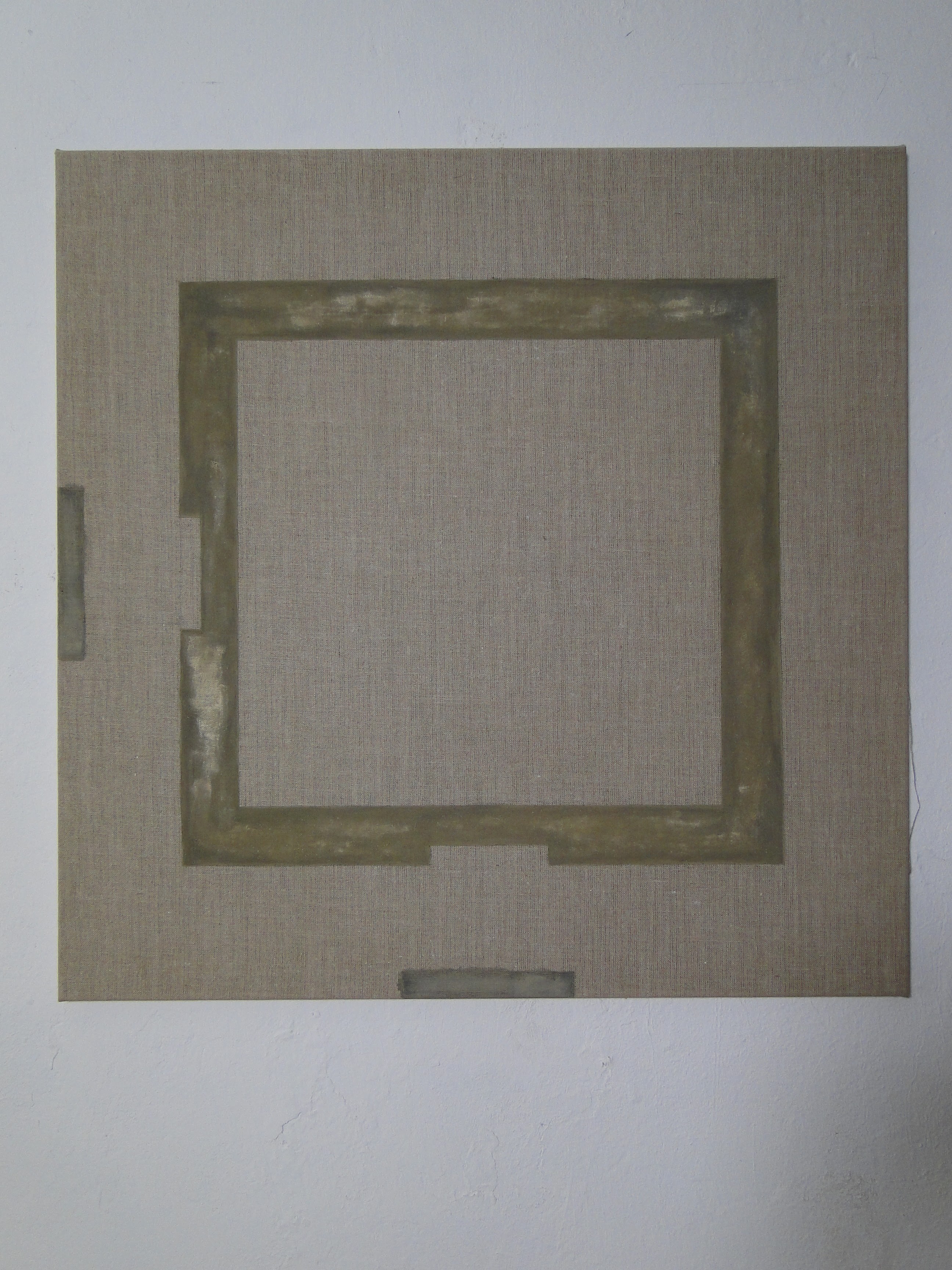 | |||||
| Introspection, 2015, Pigment on canvas, 21.5 x 21.5 inches. |
 | Twelve Apostles; Steel, copper, and glass; invited design of the main door of church Kinderlehrkirche, 2011 built in Memmingen, Germany | |
 |
| Interaction - Minimalsystem der Selbstreferenz III; 2004, Steel, 64 x 64 x 45.7 inches. The crumbling surface of the metal can be seen via time lapse photography. |
 | |||
| Sky Mirror, 2007, Steel, granite, water; 138 x 81 x 18 inches. | Private collection. | |
 | ||
Śūnyatā" Fountain; an invited design for the garden of a yoga practitioner , 2010, Cement, 39.4 x 47.2 (diameter) inches. Śūnyatā (Sanskrit) is a Buddhist concept often construed as emptiness and sometimes voidness. |
Reinhard Blank , Born in Memmingen, Germany.MFA (master class diploma), The Academy of Fine Arts, Munich , Germany
Selected Awards / Honors
- Arts Prize of City Memmingen (Kulturpreis der Stadt Memmingen), Germany.
- Special Artist Prize (‘Künstlersonderpreis’), Künstlerhaus, Marktoberdorf, Germany.
- Artwork - Raum Skulpturen ‘Garten der vier Eletmente‘ selected in publication, as one of the model and architectural inspiration in the Allgau region during 2013-2018 by Architektforum e.V. , a selection once in five years, reviewed by an international panel of professional architects.
Selected Solo Exhibitions
- Visual Structure Theory -Tractatus of Ludwig Wittgensteins, associated with a lecture ‘how to reconstruct Wolfgang Stegmüller’s Interpretation of Tractatus, a theoretical model of Ludwig Wittgenstein’s in a visual form’, University Ulm, Germany.
- ‘Aesthetics of Void’, Kreuzherrnsaal, Memmingen, Germany.
- ‘Poesie der Unterscheidung’, Schloss Hohlenheim, Stuttgart, Germany.
Selected Group Exhibitions
- "experiment konkret - Eugen Komringer zum 80.", Museum für Konkrete Kunst, Ingolstadt, Germany.
- “Sammlerkonzepte“, Kunstspeicher Museum, Würzburg, Germany.
- Anniversary Exhibition, Künstlerhaus, Marktoberdorf, Germany.Selected Public Art/Design
- ‘Interpretation from Trinity with “Minimalsystemen der Selbstreferenz”’ Ceiling Design –(size 99 m²)., Trinity Church (Dreifaltigkeitskirche), Ravensburg, Germany .
- Corridor and Worship Room Design for Arche Slowenien, Medvode Slowenien.
- Invited design of the entrance and souvenir area of St. Martin's church, Memmingen, Germany.
Selected Collections
- Municipal cultural department, Memmingen, Germany.
- Municipal cultural department, Kempten, Germany.
- DG-Bank, Hohenkammer, Germany.
- Selected Publications
- Minimalsystem der Selbstreferenz. Malerei im interkulturellen Dialog, Gallery Akzente 2001, Memmingen, Germany.
- essay – Teezeremonie und Spiritueller Raum - Überlegungen zu Wahrnehmungsformen von Transzendenz, published in Journal ‚Spiritual Care‘ volume 8(1) 2019, p. 67-75, DE GRUYTER, Germany.
- essay – Ent-täuschung – Spiritualität in book “ Spirituelle Erfahrung in philosophischer Perspektive”, p. 161-167, Walter de Gruyter Berlin, Germany.
Teaching
- 1991 - 1998 P rincipal of School 'Schule für Gestaltung', Teaching ‘philosophy of fine art,’ Ravensburg, Germany.
Contact artist:
Reinhard Blank
Thalatelier Reinhard Blank, Unterthal 33a, 88730 Bad Grönenbach -Thal Germany
email: info@reinhard-blank.de