Tuesday, December 23, 2014

TAAC Recognition:Taiwanese American Artists


TAAC Recognition: Taiwanese American Artists
 
This exhibition is formed by artists who support the launch of TAAC, the Taiwanese American Arts Council. The work is bidirectional – it enables and embodies interaction between Taiwanese American artists and their community. We also peer through a small aperture to see a spectacular world. We celebrate recognition, admiration, and support of the Taiwanese American art community from the Taiwanese community and seek the broader world’s understanding of Taiwanese American artists.
This exhibit combines different generations of expatriate artists - old and the new settlers – which adapted to various aspects to the new culture.  The correspondence is also extended to artists in Taiwan rooted in their native land. Different geopolitical periods display both differences and commonalities in creativity.
To observe the moving flow of Taiwanese American Artist, return to the 80s in New York's Soho art district where the first generation of overseas artists settled; they were quite active within the larger western artist circle, and they created a splendid historical moment. The second wave of artists from Taiwan in the 90s  faced a changing, confusing insecure world of economic and immigration difficulties. Artists based in the United States find themselves awash not only in the conflict between eastern and western, but also in the cultural whirlpool that is urban America. A metropolitan life – especially in New York - famously requires toughness and resiliency; at the same time metropolitan artists absorb multicultural influences to enrich their inherited outlook. For artists of the last ten years or new students, geo-focused fixed residence in the United States is not mandatory, and the use of new media is indispensable; their work is more diverse and more challenging.
Of the selected artists living in Taiwan, some are bound to the land on which they stand, and thus to consequent norms of culture, custom, and folk traditions; and this can be seen in the subjects which they choose. For example, eating is still an important component of a very recently rural society. In this exhibition, most art works from Taiwan are silkscreen prints, because of the passion and call of the pioneer ofTaiwan modern print making.
 
Because of limitations in space, not all of the works from Taiwan are on display, but the catalog lists all participating works. In addition, the exhibition only represents and cannot cover all Taiwanese-American artists, but TAAC has planned for the future a platform to promote and assist the development of the arts in Taiwan and the U.S.

Artists (US) : (alphabetically by last name)
Chang Lishan 張力山, Long Bin Chen 陳龍斌, Jenny Chen 陳張莉, Chen Jia Rhong陳家榮,  Tina Chen 秋瑾, T.F. Chen陳錦芳, Eric C. Chiang 江俊雄(CT ), Gao Yuan 高媛, 
Shida Guo 郭旭達, Ni Hao Hao倪灝, Hsu Ruey Hsiann 徐瑞憲,Tang-Wei Hsu 許唐瑋,
Huang Benrei 黃本蕊, Catherine Lan 藍巧茹, Jeff Chien-Hsing Liao廖健行, Lin Shih Pao 林世寶, Alen Lien 連任, Vivian Tsao曹志漪, Leigh Wen 鄭麗雲,
Lan-Chiann Wu 嵐倩(LA), Chin Chih Yang 楊金池, C.J. Yeh 葉謹睿, Marlene Tseng Yu 虞曾富美. 

Taiwan (Silkscreen prints) 絹印版畫來自台灣 :

張正仁Chang Cheng-Ren、陳永欽 Chen Yong Ching、鐘有輝 Chong You-Hui、朱哲良Chu Zhe-Liang、 廖修平Liao Shiou Ping、林雪卿Lin Xue- Ching、郭博洲Kuo Bo-Chou、徐明豐 Hsu Ming Feng、許自貴Hsu Tze-Kuai、黃坤伯Huang Kun-Bo、賴振輝Lai Chen Hui、彭泰一Peng Taiyi、沈金源 Shen Ching Yuan、蔡義雄Tsai Yi- Hsiung、田文筆Tien Wen Bi、楊識宏Chih Hong Yang 、袁金塔Yuan Chin-Ta.


『認識TAAC台美當代藝術家』TAAC Recognition: Taiwanese American Artists 展覽是雙向的,是自小看大的;我們在美國紐約以極小值的台灣藝術社群,來反應少數族群的台灣藝術家與社區的互動狀況,以及反映在他們作品上的表現與內容主題上的選擇。另一方面,藉由展出藝術作品來呼籲社區以及西方社会對於台灣藝術創作的認識、欣賞與支持,所以也是社區人士與藝術圈雙向的往來。
 
社區主義藝術議題已延伸出新的緊迫性就是對我們所處的社會和環境的關注,這也在藝術表現方法和題材上發展著。旅居海外的藝術家透過新舊移居美國時代與不同世代間的對照,比較現在根植在原生母土台灣的藝術家,這之間因著社會背景、海外藝術家的移居狀況、地緣與時段上的差異在創作上顯現相異與共同性。這次作品的陳列,我們並未特意的分隔來自台灣或居住在美國的藝術家,但是觀眾應該可以自呈現的圖像來解讀某些文化的影響。因為台灣加上藝術家這樣一個身份,在國際的社會算是少數中的少數,在這種情況下,更需要賴以在先鋒者來提起國際間的注目,在美國聽到他們的創作的聲音與圖像。
台灣旅美的藝術家在東西文化衝突的漩渦中被沖刷著,有更多樣的混種文化、都會語言、藝術思潮、主義與類型交織,尤其是旅居紐約要去適應大都市的艱辛生活,需要更多的韌性和彈性,他們吸收多元文化豐富了內心,回應國際語彙中。回溯到80年代旅居紐約蘇活藝術區海外第一批藝術家,他們互動頻繁也創出了歷史性一頁。而第二階段90年後的藝術家則似乎在生存、居留與創作的議題上面臨更大困境,近十年內的年輕一代移居紐約的藝術家或留學生,在美國集中固定居住的地緣不明顯,作品表現則顯然有較為多樣也更有挑戰性。
居住在台灣的藝術家,他們立足於自己的土地上,從母土培養豐富的資源中,從而較喜歡相應於所處的文化,習俗,民間傳統,這也反映出來在他們選擇的題材中,例如用飲食文化是社會的一個重要組成部分。此次因為廖修平教授響應TAAC的成立,特地自台灣集結了一群傑出的版畫作品參與。
本此展覽因為場地的限制,來自台灣的作品無法全部展出,但在圖錄上則列出所有的參與作品。另外,僅一次的展覽也無法涵蓋全部的台灣旅美藝術家,但是TAAC(台美文藝協會)未來將會有計劃性的推動與提供平台來協助台美藝文的發展
 

About TAAC
The Taiwanese American Arts Council was established in 2014 to carry forward the mission of the Taiwanese Art Endowment Fund which spurred the creation of a named Taiwan Gallery by the Queens Museum of Art. Dr. Lung Fong Chen and Taiwanese community leaders Thomas Chen and Patrick Huang had the vision to create an organization to provide a platform for Taiwanese American artists. Professional curator Luchia Meihua Lee, with the pioneer of Taiwan modern print making, Prof. Liao Shiou Ping, provided the expertise and art resources to realize this dream.  The TAAC aims to provide assistance to Taiwanese artists, scholars, and specialists in the arts.  TAAC will support cultural and art leaders in different fields and in all states in the US and all counties in Taiwan; it is expected to expand annually.
臺美藝術基金會旨在於透過文化藝術的合作交流提供支持臺灣與國際的對話、了解、與尊重。連結並資助在美國的臺灣優秀灣藝術創作者、專家、與學者。獎勵整合跨領域藝術創新概念;提升社區對於藝術創作的認知與欣賞; 豐富社群間的藝術對話, 鼓勵全球性的相互了解與回應。臺美藝術基金會將秉持跨越政治宗教,緊守中心宗旨並適時調整以因應國際間潮流與現實趨勢。
 
TAAC2012年正式設立於紐約,承續紐約皇后美術館臺灣藝術基金成立與臺灣藝廊的列名。基於相信透過文化與藝術的聯繫是國際相互瞭解的重要元素,由陳隆豐博士集結紐約臺灣僑領陳秋貴、黃再添、專業策展人李美華、台灣現代版畫之父廖修平教授,及旅居紐約的藝術家的力量成立,臺美藝術基金會設立宗旨在於透過文化藝術的交流連結在美國五十州與臺灣的優秀臺灣藝術創作者、專家、與學者。並將持續與逐步擴展其功能與服務範圍。

Friday, June 6, 2014

TAAC at Queens Museum 2014 Gala

Taiwanese American Arts Council 紐約台美藝術基金會
c/o Queens Museum


(紐約2014年6月5日)紐約市皇后美術館(Queens Museum)於6月5日(星期四)下午七點舉辦年度募款餐會Gala 2014,這是美術館擴建后第一次的近四百人大型餐宴。近十年來,台灣旅居紐約民間僑領與駐紐約辦事處文化中心通力合作,還有台美藝術基金會的積極參與,皇后美術館本年餐會將表揚台灣旅美藝術家李明維,對於藝術家在紐約工作多年獨特創作貢獻給予肯定。

紐約市文化部
長Tom Finkelpearl也是美術館前館長出席本次餐會頒獎。致辭也特別指出自與台灣自1995年開始接觸台灣藝術圈,並訪問台灣多次,對台灣有深厚感情。纽约皇后區長凱茲、辦事處范副處長、文化中心游主任還有台灣社區僑領協和門窗董事長陳秋貴、陳隆豐博士、黃再添、魏理仁、楊燕等還有藝術工作者賴麗惠、陳韋晴、藝術家林世寶、許唐偉、林嘉貞、黃海欣、高媛、張宏圖,表演藝術家陳詠俐、林維洋、蘇郁涵、顏加棋等逾五十人來自台灣社區的參與賓客。


Lee Mingwei, Susan yu, Yungli,
Natalia, Luchia
Yen Chiachi, Andy Lin, Luchia,
Zhang Hongtu,
 Huang Mianling, Wei Liren 
HsuTangwei, Tom Finkelpearl
藝術家李明維(lee Mingwei)12歲移民美國,畢業於耶魯大學雕塑系,曾於紐約當代美術館、惠特尼美術館、皇后美術館布魯克林美術館與美國各州多個知名美術機構辦理個展,是美國的台灣藝術家中少見的精英創作者,他的獨特的創作形式以透過行為與裝置來進行與觀眾的溝通為主要觀念。如【睡眠計劃】邀請觀眾在他裝置的的展場睡床共度一夜、【晚餐計劃】邀請一位觀眾與其在美術館裝置餐室共進晚餐談話等,他目前也正在日本森美術館展出【李明維與他的關係】Mori Art Museum “Lee Mingwei and His Relations”計劃。
Lee Mingwei, Chen Yungli, Luchia
Joanne, Yuhan su

台灣藝術社群自80年第一代旅美藝術家在紐約蘇活區聚集而發展,培育出極為可觀的藝術創作者歷史,也影響了台灣本土的藝術形態。跟隨著紐約藝術圈的活力與多元化藝術創作,台灣藝術需要集中更多的資源以引發關注,並對未來永續發展積極支持。台美藝術基金會(Taiwanese American Arts Council)創辦人陳隆豐(Dr. Long Fong Chen)、陳秋貴(Thomas Chen)與黃再添(Patrick Huang)及藝術策展人李美華(Luchia Meihua lee),經過多年積極籌劃,也得到台灣現代版畫之父廖修平(Liao Shiou Ping)的參與,期推動美國社會對於台美藝術創作的交流與認識。自2004年,因著{聯結Nexus]展覽的舉辦,紐約台灣社區僑領逐步參與皇后美術館的各項展覽活動,在2012年,跟隨紐約皇后美術館擴建後的台灣藝廊與基金的列名,於2014年非營利的機構「台美藝術基金會」的成立。這一個基金會將突破政治、宗教與及種族的限制,以藝術為最高價值,將逐漸的聯結美國各藝術機構以提高國際上對於台灣藝術的了解,並擴展活動平台的建立,長期持續深化研究與推廣。
Lee Mingwei 

台美藝術基金會將推動在紐約市認可每年七月的第一個星期為【台灣藝術週】(Taiwanese American Art Week),並聯結支持各項台灣藝術活動。
Huang Zihuan, Lin Shihpao, Gao Yuan,
Lee Mingwei, Luchia (front)
Dr. Lung Fong Chen, Tom Finkelpearl, Consulate Fan
Thomas Chen


Thomas Chen, Luchia, YungLi, Yuhan, Joanne


台美藝術基金會聯絡處:c/o紐約市皇后美術館

Hsu Tangwei, Lin Shih Pao,
Zhang Hongtu, Miaoling


Queens Museum)位於法拉盛可樂娜公園大地球對面。
7號地鐵Will
​Willets Point下車。
Taiwanese American Arts Council
c/o   Queens Museum
New York City building,
Flushing Meadows Corona Park
Queens, NY 11368-3398


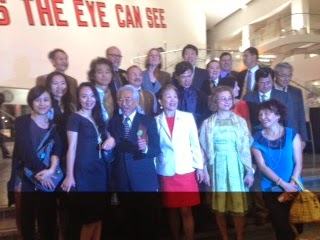
圖片(​一)合照​​:第三排:​文化局長​Tom Finkelpearl(​​​左​​​2)、皇后區長​Melinda ​​Katz​(​​左​3)、台北經文處范副處長​​(左​四)​​、​僑領​​​陳隆豐​博士((右​32)​、​協和門窗董事長​陳秋貴(右​1​)、第一排: ​藝術家​黃海欣(左1)、​僑領​黃再添(​​左3)、​策展人​李美華(右2)、黃女士(右1)。第二排:藝術家林嘉貞(左1)、藝術家林世寶(左2​)​、受獎人李明維(左4)、藝術家
高媛(​左​5​)。

Thursday, March 6, 2014

Carle Shi's intersactions


by Luchia meihua Lee
Thought, 2005, gallery view, photo by Editorial gallery


Unlike most New York Chinese diaspora artists, Shi has followed her own artistic path. The crossroads of her life journey have been addressed in her paintings.  In place of exotic cultural elements or social criticism, her paintings feature more intimate existence disclosure.  She created still life paintings before 2000, and figurative paintings from 2000 to 2007. Afterward, she continued with rich color, emerging into a seemingly pop mode that deconstructed time space paintings, reinterpreted fauvism and particularly cubism employing feminine imagery in organic motion.

Anthony Haden Guest, 2005, Oil on Canvas
With her background in academic art in China, Shi developed strong skills in realistic painting; and embraced the deep realism of western portraiture. Gradually a conceptual semiotics crept into her still life and mirror structure painting.  In one such mirror image, the contrasting figures express ambiguity. Some of these clear images face the practical world without emotion beyond helplessness or anxiety.  On the other side of the mirror, images are blurred; the figures seem unfinished or look in different directions, giving a hint of spirit. These typically are large signature paintings, for example Anthony Haden Guest.

Shi sometimes adapts elements from western master pieces.  A small painting entitled Prayer involves two green squashes sporting sexy female bodies, reminiscent of a farmer’s couple in Jean-Francois Millet’s “The Angelus, 1857–59.” The thin string and hanging champagne glass refer to the fragility of human relationships. The water bubbles splashing on the squashes are found often in her pop series. The objects depicted seem straight forward and clear, even optimistic; however closer inspection reveals unclear images, despair, and intersection.

Prayer, 16x14 inches, oil on panel, 2014
Her pop paintings, such as self-portrait #1, deconstruct Roy Lichtenstein’s photo pixels by use of a cubic style and a hyperrealism. Thick pouting lips express sexiness and desire on an urban lady. The bubbles and water droplets are not mere repetition; they are a talismanic reminder of the artist’s skill, and a trademark.

In very recent works, Golden Skull and Dimond Head, Shi has connected portraiture to philosophical issues. Shi continues to mature as an artist, merging her latest work pop with acute realism and dry wit to produce a new contemporary genre.
Diamond Head, 25x25, oil on panel,  2014
Pop series, gallery view, photo by Editorial Gallery


Summer Kiss
Butterfly

Monday, February 17, 2014

From Marcel Duchamp –to Asian Contemperary Art 從杜象到亞洲當代藝術

From Marcel Duchamp –to Asian Contemporary Art
從杜象到亞洲當代藝術
Luchia Meihua Lee
Duchamp is one of the most influential artists of the 20 century. It is clear that what he valued most was neither art itself nor the creation of masterpieces, but life itself. Not the creation of masterpieces but the free play of the intelligence.

In 1902, Duchamp started painting; in 1923, he abandoned painting for good. Towards the end of his life, he spent much of his time playing chess. Many discussions and essays discussed his chess philosophy, and the idea of opposites, motivated in part by the fact that his reputation is firmly rooted in paradox. In fact, he co-wrote a book proving the identity of the idea of the reconciled opposite (for example, yin and yang) and the theory of “sister squares” in chess.

Some say that another of Duchamp’s ideas - “Anti- Art” - tried to hide his failures as an artist.  In fact, Duchamp did not make any effort to advance his reputation or to gain fame.
In 1915, he moved to United States, taking American citizenship in 1955, and becoming a patron saint of art, and a legendary figure.

He was 6 years younger than Picasso; the “Nude Descending a Stair Case” in 1913 appeared at the Armory show, and demonstrated the way to fusion of factorism, futurism, and cubism. The creation procedure taken place a still painting idea. From 1920 to 1930, he shifted from Dadaism to surrealism.

His concept of “Ready Made” works broke the exhibition definition and the relationship of art work to museum or gallery. Enrolled spectator’s interpretation in a important part. In object in motion pieces, such as rotary machine, revolving disk and abstract cinema foreshadowed the current fascination with kinetic sculpture and film making.

The cover of magazine piece” Cahiers d”Art” in 1936, was found 25 later became the first “Op Art”
“The Mise-en-Scene” is the surrealist and happenings and environments in 1950-60s
“Cartesian Mind” he refused to accept anything on faith, and like he mentioned in his idea” had to find in my work something that had not existed before.”

His attitude to the life, and unique ideas in art drawled many of alternative thinking way in the art world. A deep influential to western art history, it also gives Asian contemporary artists many of inspirations.
(to be continued)

杜象(Marcel Duchamp)無疑是二十世紀藝術史上最具影響力的藝術家之一, 早在普普藝術、觀念藝術、甚至於動力雕塑出現以前,他已經清楚的為藝術提出全新的解釋,藝術不是他所珍貴, 生活才是真正的價值 , 藝術不是在於大師的創作, 而是在於無所限制的、必須邀請觀眾一同參予的創作智慧

1902 年後 ,杜象開始以繪畫為主的藝術家生涯, 1923 年他宣佈放棄繪畫, 開始全時間的下棋生活, 他花上所有的時間下棋, 在許多論述及作品中出現這樣的下棋文學及對立主題的觀念,因此棋藝自然成為杜象一生作品中的核心主題或是概念之一如Sister Square 另有某種傳說杜象所提出的 ”Anti-Art” 是用來掩飾他在藝術上的失敗, 事實上他並未以任何方式去讓他自己成名,他以低調的姿態卸去藝術家的光環,唯有如此才能夠更加自在地在創作的領域中運籌1915杜象移居美國,  1955成為美國公民並且在以紐約為主的當代藝術圈扮演類似「教父」般的傳奇角色, 他與畢卡索相去6 , 1911-12顯出他投注在立體主義及空間結構的興趣, “下樓梯的裸女”(Nude Descending a Staircase, No. 2) 1913年出現在軍械庫展(Armory Show )成為集工業未來主義及立體派的經典作品, 該作創作的過程表現取代了停滯的繪畫觀念,當時造成騷動,每天數以萬計的民眾湧進展場大多是為了一睹這件驚世駭俗之作。

1920-1930他從達達主義者轉成為超現實表現, 並自1914年起開始提出「現成品」藝術,隨機選擇大量製造的工業物品,經過簽名或是稍加修飾的行為,現成物品變成藝術品的等身,他的現成品藝術觀念打破了展出藝術品的定義, 藝術收藏與展覽場所-美術館或畫廊中的關係,杜象一生共製造約20「現成品」,幾乎所有原作都已經「遺失」,目前美術館和私人收藏的都是杜象根據原作複製的「現成品」,因此「現成品」是否純如杜象所言只是藝術家簽過名的物件,在西方學者提出質疑之後已經成為目前杜象研究的核心議題;1930起,杜象對運動產生的視覺幻象產生興趣,一系列在移動物體的創作中──如旋轉機器、迴旋的圓盤、抽象的劇場等 提供了動力雕塑、影片動畫製作的新意,其中他為雜誌封面設計的“Cahiers D’Art”起動了 25年後的歐普藝術

杜象拒絕了任何存在教條信仰, 只創作以往不曾存在的作品。他獨幟一格的生活態度及對藝術的創見引發了許多另類的思考,也影響了其後西洋藝術及亞洲當代藝術作品型態。
我想根據研究論述去探討他的現成品, 手稿  ,海報 ,繪畫裝置品 , 以及取得當年相似工業產品進行比對 ,以了解是否其作品, 真為現成工業產品直接放置展示 , 或是其中另有蹊翹並將依據論述逐一實例舉證。

另在許多不為人知的小作品中, 檢視一般未見的隱藏影像, 及視覺錯覺的運用。研究將打破一般人僅以杜象為達達大師之礙, 從更為寬廣的角度去研究他的生活態度及自時代與社會背景去研究了解這些表現。

而以研究列舉當代亞洲藝術家受到的影響者, 如一位居住在法國的華裔藝術家黄永平、旅美華裔藝術家張宏圖(Material Mao、門等)、席非的畫、或張力山(棋盤)、在北京的艾未未、在台灣的 梅丁衍等等,作品明顯的出現杜象作品中觀念及蹤跡 ,而其他的藝術家在想法或是觀念上以及形式上的又在何處受其影響,也是我想關注的另外將杜象在他的作品中出現與光學上, 動力藝術上, 以及超現實, 精神領域 玄學,神學,童話, 女性意識 ,以及數學及哲學 社會有關的議題,來檢視這一位綜合創作的傳奇生活藝術家的一生及影響

許多當代藝術作品的出現違背了藝術的美學原則, 被視為是驚世駭俗, 或是我們所認為是極度科技性新發明及創作, 卻在十九世紀初已經在杜象的作品中出現, 當深入了解及研究調查, 發現這些所謂具有新意的作早已被隱指出 或是直接表現 ,當杜象將蒙那麗莎的微笑作品加上鬍鬚, 是以在1903的時候已經出現, 在探究動力藝術作品, 在他的作品中已經使用動力馬達及觀眾參與探究視覺的錯覺印象, 另外在他的可見的素描作品中試圖隱藏不可見的負像, 也值得經由現象學來的探究 , “盲人”(Blind Man) 刊物中引出了抽水馬桶與佛像及聖母像的觀眾會心一笑及專家與業餘之疑. 經由深入淺出的引導了解杜象的時代意義。(待續)

Xi Fei's "There is No Ideology"

There is No Ideology - Only Collective Forms of Desire System and Organization of Power, 2012
 60 x 48 inches, Acrylic on Canvas

you can enjoy this Xi Fei  image when you watch it more, as the bulls and rushing traders that symbolize Wall Street. The bulls line up walking down the stairs just as in Duchamp's "Nude Descending a Staircase" and the hanging sides of beef echo Francis Bacon's “Figure and Meat." Xi Fei is making a sarcastic comment on capitalism's sacred evils. Xi Fei likes to pick fragments from historical masters. An upside-down helicopter reflection appears in this piece, just as it is found in many of Xi Fei's works – for example, with the zebra in another of his pieces at the museum exhibition. Also from the English title and artist’s name, you will know there are more art works to be seen.


The US China Press (Qiaobao) has reviewed the Raising the Temperature exhibition at the Queens Museum. Although you might not be able to read the Chinese in this coverage, you can enjoy the image. 
the link to NY China Press    http://ny.usqiaobao.com/news/community/42241-2014-02-04-06-46-58.html?tmpl=component&print=1&page=